
In manufacturing, maintenance rarely gets the luxury of working in isolation. Whhen a production line stops or a recurring fault comes back earlier than expected, preventive work planned for the afternoon suddenly has to compete with an urgent breakdown. Meanwhile, the maintenance manager still needs to know what has been done, what is overdue and where the next risk might appear. This is where a CMMS for manufacturing earns its place. At Rimses, we believe maintenance software should help people deal with this reality rather than add another administrative layer on top of it. Our platform brings work orders, maintenance planning, spare parts, procurement, mobile execution and reporting into one environment. More importantly, it was designed around the people who actually use it on the shop floor.


A CMMS (Computerized Maintenance Management System) is used to organise and follow maintenance activities across equipment and facilities. A CMMS has to help maintenance teams keep production assets available while dealing with planned work, unexpected failures, spare-parts requirements and the practical constraints of the factory floor.
Every asset can become a critical link in the production line. That is why we see a manufacturing CMMS as much more than an electronic maintenance log. It should tell your team what needs attention. It should help technicians execute the work. It should preserve the history behind the asset. And once enough information has been collected, it should help you understand where maintenance resources are really going.
A good system also needs to accommodate the fact that different manufacturing environments face different maintenance realities. Food-processing teams, for example, have to combine equipment availability with strict procedures and food-safety requirements. Rimses supports this type of operation with preventive maintenance planning, mobile inspections and checklists, spare-parts management, failure reporting and maintenance traceability. In process industries, the priorities shift towards continuous operations, shutdown planning, preventive inspection lists, work permits and safety rules. Recycling operations introduce another reality, where keeping assets moving is essential to maintaining the flow of materials. Rimses supports condition-based maintenance, inspections and mobile execution in those environments.
In few words, manufacturing maintenance is not one uniform activity. Your CMMS should be able to support the way maintenance actually happens in your operation.
Too many maintenance systems are selected at management level, configured correctly and technically deployed, only to become something technicians use reluctantly. The result is predictable: work gets done, but the system only receives part of the story.
We built Rimses around a different premise: a CMMS only creates value when maintenance teams actually use it. That is why the platform is designed for everyday work on the floor rather than merely for reporting after an intervention has been completed. Rimses combines the controls maintenance managers need with mobile tools technicians can take directly to the asset.
Rimses can support on-premise environments when organisations need tighter control over critical maintenance data, availability and IT governance. Our licensing model can also be based on concurrent users, which is particularly relevant for manufacturing organisations where teams rotate across shifts rather than every employee working in the system simultaneously.
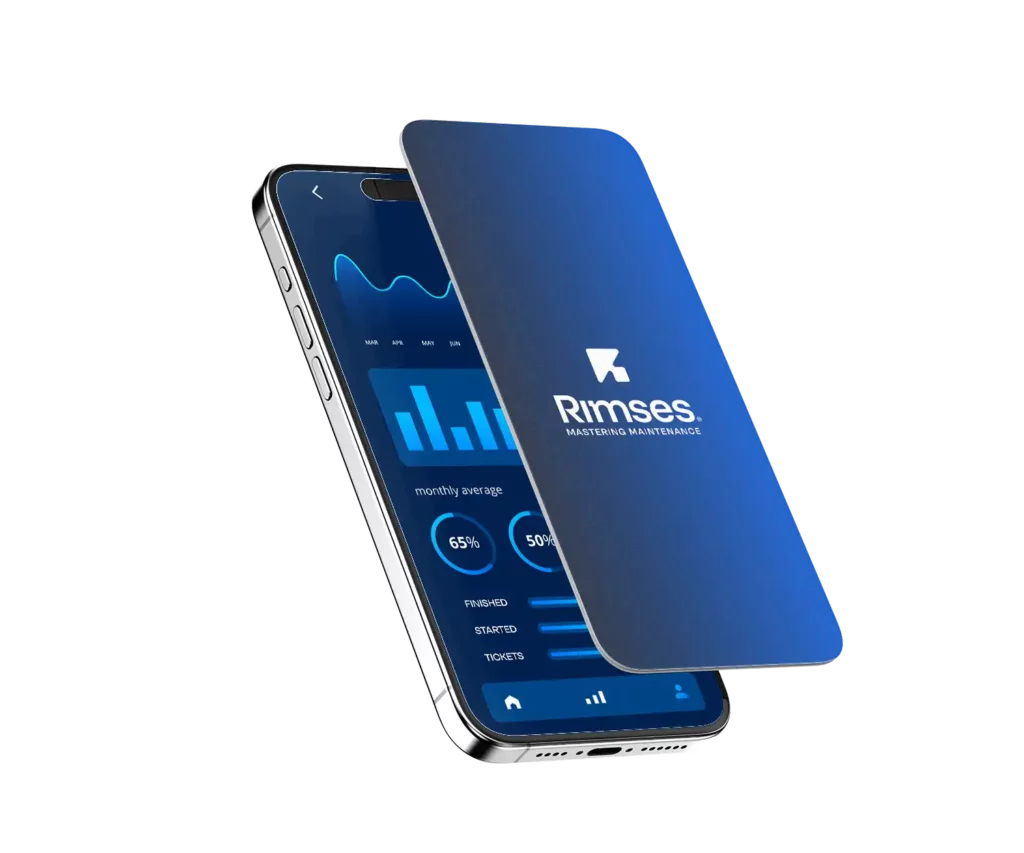
Maintenance starts with knowing what has to happen next. Rimses allows teams to plan, prioritise and track preventive, corrective and condition-based maintenance. Planning can be handled through several approaches, including simple, cascade, bulk and graphical planning, with drag-and-drop functionality and forecast planning.
That flexibility matters when a maintenance department has to balance two worlds :
A manufacturing CMMS has to let both coexist. Planning cannot become so rigid that an emergency breaks the system, but corrective work should not make preventive maintenance disappear from view either.
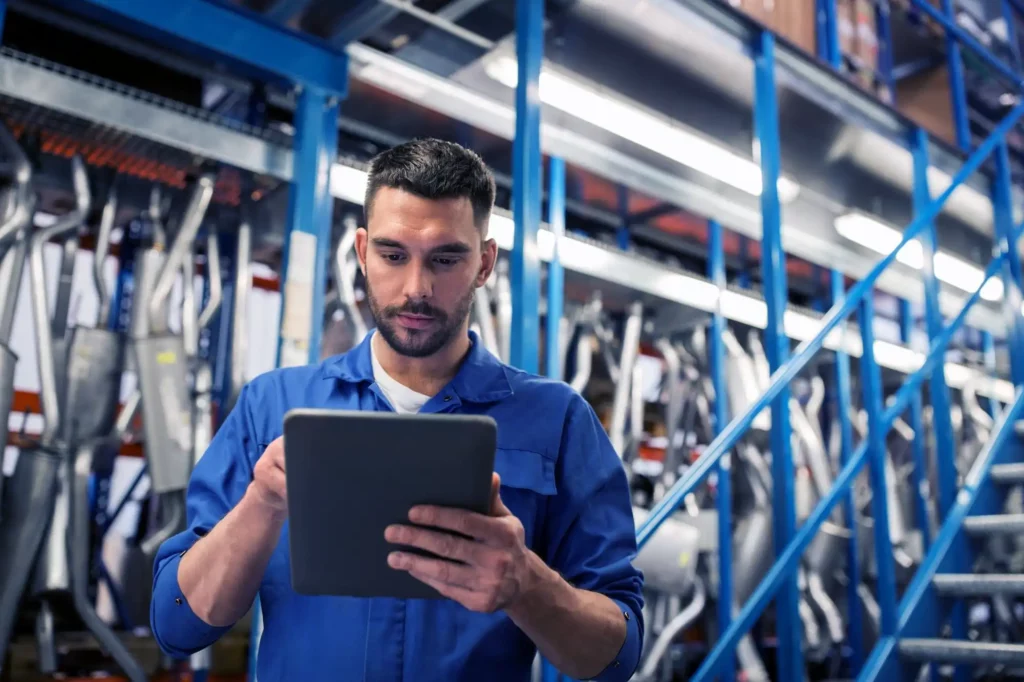

Rimses extends maintenance activity directly to the floor through its mobile ecosystem. Rimses Mobile Maintenance+ supports work orders, checklists, automatic time registration and failure reporting, and can be used online or offline. Rimses also offers Mobile Work Requests, allowing people on the floor to report failures through a simple process. The broader mobile ecosystem includes tools for warehouse activity and safety processes as well. This is one of the ways we try to shorten the distance between noticing a problem and acting on it.
Maintenance planning only goes so far if the required material is missing when the intervention starts. Rimses links spare-parts management directly to maintenance operations. Parts can be connected with bills of materials and work orders, while reorder alerts help teams monitor stock availability. The platform also supports inventory counting and multi-site spare-parts management. This gives maintenance teams a clearer link between the work they are planning and the material that work depends on.

The first benefit is visibility. When planned maintenance, corrective jobs, spare parts and work histories are managed in separate places, maintenance managers spend too much time reconstructing what is happening. Our CMMS for manufacturing gives that activity a common structure.
The second is consistency. A preventive task does not depend purely on someone’s memory. A breakdown does not disappear into an informal conversation. A spare part used during an intervention can be brought into the same operational flow.
But for us, one benefit stands above the others: better adoption creates better maintenance data. If technicians can access work orders and record activity directly where the work happens, the gap between reality and the system becomes smaller. That makes the information available to managers more representative of what actually happened on the floor.
This is also why different industries use Rimses differently. A food manufacturer may focus heavily on preventive maintenance, inspections, checklists and traceability; whereas a traditional manufacturing plant may place
more emphasis on prioritisation, shop-floor execution and MRO inventory. Our CMMS provides the common maintenance framework. The operational priorities determine how that framework is used.

A CMMS does not improve manufacturing merely because it has been installed. The improvement comes from what happens afterwards. Per example : a failure is reported sooner. The responsible team sees it. The work can be prioritised. A technician receives the relevant order. Required parts are linked to the job. Information is captured while the intervention is taking place. That history becomes available for future planning and analysis.
Over time, this creates something particularly valuable in a factory: continuity. The knowledge surrounding an asset no longer exists only in the head of the technician who knows that machine best. It becomes part of the maintenance history.
The same principle applies at management level. Instead of relying primarily on intuition, maintenance managers can use dashboards and asset information to follow costs, failure patterns, work orders and maintenance indicators. And because manufacturing does not stop at the maintenance department, Rimses is designed to connect with existing systems, including ERP-related procurement workflows.
CMMS stands for Computerized Maintenance Management System. In manufacturing, it is used to organise maintenance activities around production assets, including work orders, preventive maintenance, spare parts, intervention histories and maintenance reporting.
Yes. Rimses supports preventive, corrective and condition-based maintenance within the same planning and work-order environment.
Rimses is designed for asset-intensive industrial organisations rather than one single vertical. Manufacturing is one of its documented use cases, alongside food processing, process industries, recycling, and transport and heavy-asset operations.
Yes. Mobile execution on the shop floor is one of the core manufacturing use cases identified by Rimses. Mobile Maintenance+ supports work orders, checklists, automatic time registration and failure reporting.
Yes. Rimses Mobile Maintenance+ is designed for both online and offline use, allowing technicians to continue working in industrial areas where connectivity may be unavailable.
If you are looking for a CMMS that your manufacturing team can actually use where maintenance happens, book a Rimses demo and test the platform against your real shop-floor workflows
