
If you are comparing a CMMS vs EAM, the terminology can make the decision look more complicated than it really is. Both systems deal with physical assets. Both can support maintenance. Both can contain work orders, asset information, spare-parts data and reporting. And as the software market has evolved, the border between the two has become less clear than it once was. But then, what are the differences between CMMS and EAM? Let’s check it out.


CMMS stands for Computerized Maintenance Management System. At its core, a CMMS gives the maintenance department one environment in which to organise its work. Instead of preventive schedules living in spreadsheets, breakdown information staying in emails and spare-parts data sitting in another system, the CMMS brings maintenance information together. Teams can plan interventions, create and follow work orders, keep equipment histories and document what technicians have done.
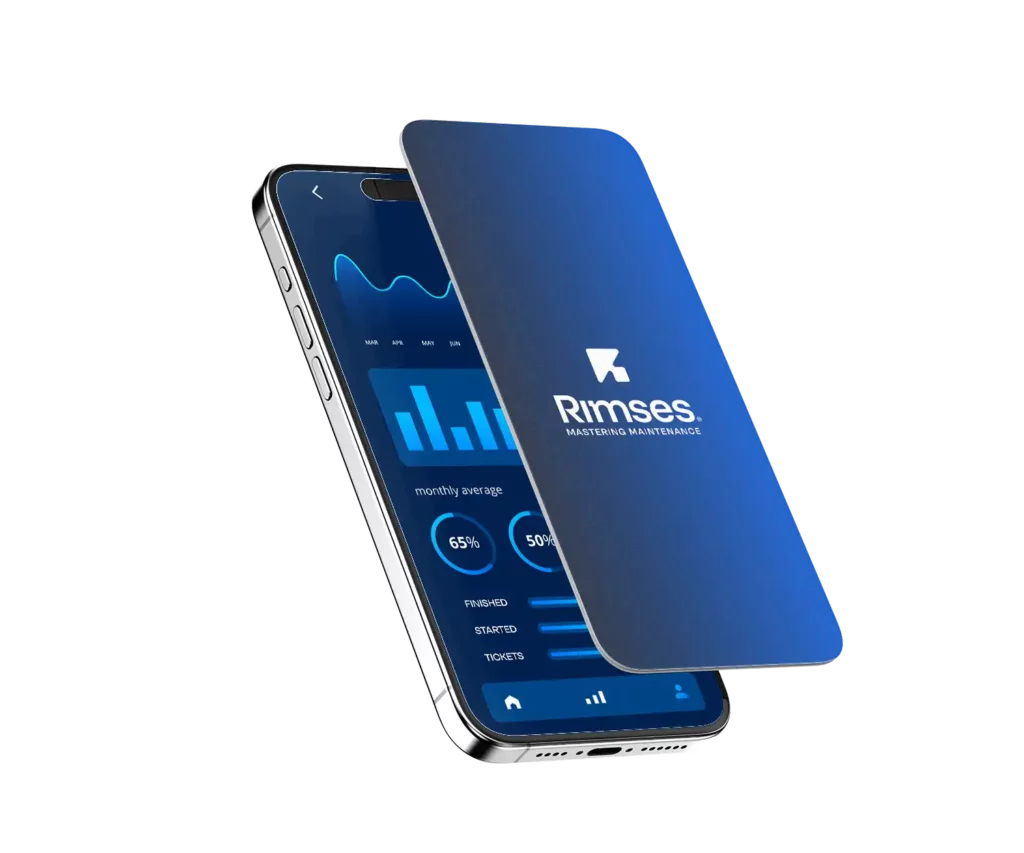
But a maintenance system can hold excellent data and still fail if technicians do not use it during their working day. That is why Rimses approaches CMMS from the shop floor upwards. Our platform supports preventive, corrective and condition-based maintenance, priority management, graphical and forecast planning and real-time visibility of mobile work orders. Spare parts can be connected directly to work orders, and maintenance purchasing can remain connected to the broader process.
For us, a CMMS is therefore not primarily a database. It is the operating environment of the maintenance team.
EAM stands for Enterprise Asset Management. The important word here is not “asset”. It is “enterprise”. An EAM looks beyond the maintenance department and considers the physical asset over a wider part of its lifecycle.
That can include acquisition, installation, operation, maintenance, reliability, contracts, costs and eventually replacement or decommissioning. This broader scope is particularly relevant in organisations where physical assets represent major investments. Consider a production line, a large processing installation or a fleet of expensive heavy assets. The maintenance department naturally wants to know how often those assets fail, what work has been performed and what spare parts they consume. The organisation may want to go further. What did the asset cost to acquire? How has it performed throughout its life? What budgets are attached to it? When does maintaining it stop making economic sense? What happens when it needs to be replaced? These questions can be answered with the EAM.


The clearest difference is scope. A CMMS starts with the question: How do we organise and improve maintenance? An EAM starts with a broader one: How do we manage the value and performance of our physical assets throughout their lifecycle? That distinction changes who uses the system and what decisions the data supports.
In a CMMS, the centre of gravity is the maintenance organisation. Maintenance managers, planners, technicians and reliability teams use the software to keep assets available and work under control.
An EAM can involve a wider set of stakeholders. Procurement, finance, engineering, operations and asset managers may all contribute to decisions about the asset throughout its life.
There is considerable overlap. Both systems may manage work orders. Both may contain asset hierarchies. Both may support preventive maintenance, stock management, dashboards and purchasing processes. This is why simply looking at the label on the software is increasingly unhelpful. Modern CMMS platforms have become more sophisticated. The boundary between the two is therefore becoming increasingly blurred. What matters is how deeply each system supports the processes your organisation actually needs.
One way to understand the difference is to follow an asset through its life.
Imagine you buy a critical piece of industrial equipment. With a traditional CMMS, the system becomes particularly important once the machine enters operation. Maintenance teams create preventive plans, assign work orders, record failures, consume spare parts and build an intervention history. The objective is operational: keep the machine reliable and available.
With an EAM, the asset enters a wider management framework. Its acquisition, installation, lifecycle costs, maintenance performance and eventual replacement can become part of the same asset-management logic.
Scale can also be different. EAM platforms have traditionally been associated with large, distributed asset portfolios and broader multi-site environments. CMMS tools historically tended to focus more tightly on maintenance teams or specific locations, although this distinction has weakened considerably as modern CMMS platforms have expanded.
Rimses is a good example of why the old definitions no longer always fit neatly. Our platform provides multi-site spare-parts management, purchasing workflows, suppliers and price lists, maintenance analytics, audit traceability, safety processes and ERP-connectable workflows alongside the core CMMS functions of planning and work-order execution.
At the same time, we deliberately remain maintenance-driven. Rimses is designed around technicians, planners and maintenance managers. We do not believe adding enterprise-level functionality should make the day-to-day maintenance experience heavier.

Start with the problem, not the category. If your organisation mainly needs to improve maintenance execution, a CMMS may be the most natural fit. Perhaps preventive maintenance is still difficult to plan. Work orders are poorly documented. Technicians spend time searching for information. Spare parts are disconnected from jobs. Managers lack a reliable picture of failures or workload. Those are fundamentally CMMS problems.
If your need goes further into the complete lifecycle and enterprise management of physical assets, then you are moving towards EAM. That may be the case when acquisition, lifecycle budgets, asset value, replacement strategies and cross-functional asset decisions need to sit in one broader management structure.
But there is a third situation, and it is increasingly common. You may need the depth of a strong CMMS without wanting to create a maintenance silo. Your maintenance team needs excellent planning and mobile tools, but procurement must remain connected. Spare parts matter. Compliance matters. Multi-site operations matter. Your system may need to exchange information with an ERP. Managers need reporting that supports reliability and cost decisions. This is where a platform such as Rimses is designed to sit. Rimses combines planning and work-order management, mobile execution, inventory, procurement, reporting, safety and audit traceability within one maintenance-focused environment. And we deliberately put adoption at the centre.
A system can have an impressive enterprise architecture and still underperform if the technician sees it as an administrative burden. Rimses Mobile Maintenance+ brings work orders, checklists, time registration and failure reporting to the floor, including online and offline operation. The wider mobile ecosystem also covers work requests, warehouse activity and safety workflows.
This is why, when organisations ask us whether they need CMMS or EAM, we prefer not to answer from an acronym. We ask what they actually need to manage. Those questions usually reveal the answer far more quickly than a feature checklist.
If your requirements sit somewhere between a traditional CMMS and a full EAM approach, bring us your actual process. During a Rimses demonstration, we can show you where the platform covers day-to-day maintenance and where it extends into broader enterprise asset management.
No. They overlap significantly, but their traditional scopes are different. A CMMS focuses primarily on maintenance operations, while EAM addresses the physical asset across a wider lifecycle, potentially from acquisition through disposal.
Yes. Modern CMMS platforms often include inventory functions. Rimses, for example, links spare parts with bills of materials and work orders and provides reorder alerts, inventory counting and multi-site support.
Rimses covers core CMMS functions such as work-order management, preventive maintenance and mobile execution, while also extending into spare parts, procurement, multi-site processes, reporting, compliance and broader asset-management capabilities.
